June 1980
Rob’s Birth
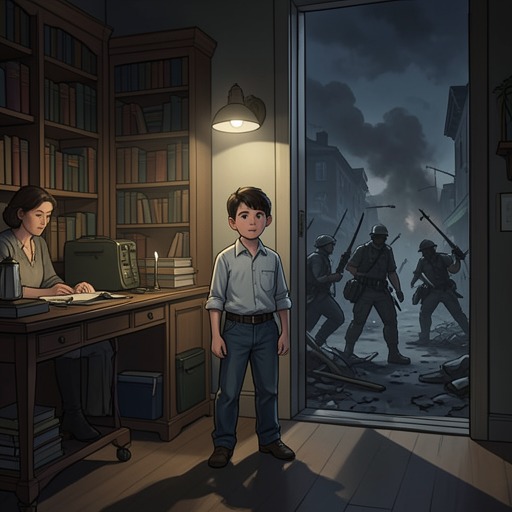
[Robert DeShaun Peace](entity:character-recall-character-robert-deshaun-peac-43302d2e821a) is born to [Jackie Peace](entity:character-recall-character-jackie-peace-6895f19405a6) in [Orange, New Jersey](entity:location-recall-location-orange-new-jersey-261489f90455), and brought to [181 Chapman Street](entity:location-recall-location-181-chapman-street-20422b0db346). His mother immediately becomes the central force in his life, determined to raise him independently despite poverty, neighborhood danger, and [Skeet Douglas](entity:character-recall-character-skeet-douglas-57951c1b64de)’s drug involvement.
The home, family, and surrounding streets establish the tensions that will shape Rob: intellectual possibility alongside urban deprivation, fierce maternal protection alongside masculine street culture, and a permanent pull between belonging and escape.
Early 1980s
A Divided Family
Jackie refuses to marry [Skeet](entity:character-recall-character-skeet-ffe7ab5484ef) or move into his house, believing that marriage would endanger the family’s stability and her independence. Skeet remains involved with Rob, taking him around [East Orange](entity:location-recall-location-east-orange-2c9a40703880) while Jackie reads to him and protects his time and imagination.
The arrangement gives Rob two formative worlds: his mother’s books, discipline, and caution, and his father’s sociability, street knowledge, and confidence. Their competing ideas of manhood begin shaping the divided identity Rob will later call [Newark-proofing](entity:expression-recall-expression-newark-proofing-de684d33c755).
Mid-1980s
The Professor Emerges
Jackie reads constantly to Rob, and by the age of two he memorizes sentences and points to words. At day care, adults begin calling him “Professor” because of his unusual intelligence and relentless questions.
His intellect becomes both a source of pride and a possible route out of [East Orange](entity:location-recall-location-east-orange-2c9a40703880). Yet his gifts develop inside a crowded, unsafe neighborhood where academic ambition has little social currency and may itself make him vulnerable.
Mid-to-late 1980s
Street Football Identity
Rob becomes known in neighborhood football games for punishing tackles and the shouted phrase “Patent that!” He imagines himself as Lawrence Taylor while older residents and street players watch and cheer.
The games teach him that physical toughness can purchase respect in a setting where academic excellence cannot. This performance of hardness later becomes one of several identities he switches between at school, at home, and on the streets.
August 9, 1987
Skeet’s Arrest
[Skeet Douglas](entity:character-recall-character-skeet-douglas-57951c1b64de) is arrested in [Irving Gaskins](entity:character-recall-character-irving-gaskins-d010530ad848)’s [Newark](entity:location-recall-location-newark-894909e0ba1f) apartment for the murders of Charlene Moore and [Estella Moore](entity:character-recall-character-estella-moore-09c853a200b2). Police report finding a loaded [Taurus Spesco .38-caliber revolver](entity:object-recall-object-taurus-spesco-38-calib-ab527794a725) on him, and ballistics later connect it to the bullets recovered from the victims.
Jackie learns that [Skeet](entity:character-recall-character-skeet-ffe7ab5484ef) is being sought while she is working, then hears from [Carl](entity:character-recall-character-carl-253c86b9cb77) that the charge is murder rather than drug dealing. The arrest ends Rob’s ordinary childhood relationship with his father and begins the long legal and emotional shadow under which he will grow up.
August 8, 1987
The Chestnut Street Murders
Charlene and [Estella Moore](entity:character-recall-character-estella-moore-09c853a200b2) spend the night drinking and using cocaine in their [East Orange](entity:location-recall-location-east-orange-2c9a40703880) apartment with Georgianna Broadway. At dawn, five shots are fired: both sisters die, Georgianna is wounded, and Charlene’s infant survives in the apartment.
Georgianna later identifies [Skeet](entity:character-recall-character-skeet-ffe7ab5484ef) through a photograph and claims she recognized his voice, though she never saw the shooter clearly. The prosecution’s case rests on this fragile identification, the gun, and a crime scene whose unanswered contradictions will remain central to Skeet’s defense.
Late summer 1987
Rob Learns the Truth
Jackie delays telling seven-year-old Rob that his father is jailed for murder. When he finally learns, he asks repeatedly when [Skeet](entity:character-recall-character-skeet-ffe7ab5484ef) will return rather than why the crime occurred.
Rob continues to believe his father is innocent and visits him at [Essex County Jail](entity:location-recall-location-essex-county-jail-2e79ea25d559). The revelation creates a lifelong attachment to Skeet’s defense and transforms Rob’s childhood loyalty into a mission to restore his father’s name and freedom.
1987–1990
Skeet’s Pretrial Ordeal
[Skeet](entity:character-recall-character-skeet-ffe7ab5484ef) spends more than three years in jail while his public-defense status is disputed and appeals over indigency, forms, and representation move slowly. During this period, he fights largely for the right to have lawyers capable of presenting his innocence.
The delay costs the defense witnesses and momentum, including [Irving Gaskins](entity:character-recall-character-irving-gaskins-d010530ad848), who dies before providing a formal deposition. For Rob, the prolonged pretrial period consumes much of childhood and makes the criminal justice system a permanent presence in family life.
1988–1990
Jackie Chooses Private School
Concerned that Oakdale Elementary is merely containing children rather than teaching them, Jackie attends night school, takes a second job, and saves for private tuition. She sacrifices food, clothing, rest, and personal comfort to move Rob into a stronger academic environment.
The decision formalizes her belief that education is Rob’s path out of [East Orange](entity:location-recall-location-east-orange-2c9a40703880). It also creates a financial burden that will shape every later choice, including Rob’s determination to support her and his anxiety about becoming dependent on anyone.
September–November 1990
Skeet’s Murder Trial
[State of New Jersey v. Robert Douglas](entity:action-recall-action-state-of-new-jersey-v-5324e91e4b3a) finally goes to trial. The prosecution presents police testimony, the ballistics evidence, the disputed crime-scene search, and Georgianna Broadway’s identification; the defense offers only a few character witnesses and does not establish a persuasive alternative narrative.
The jury deliberates at length but ultimately finds [Skeet](entity:character-recall-character-skeet-ffe7ab5484ef) guilty of two murders, aggravated assault, and illegal handgun possession. The trial fixes the state’s version of events in public memory even though the motive, witness reliability, and police conduct remain unresolved.
December 13, 1990
Skeet Receives Life
[Skeet](entity:character-recall-character-skeet-ffe7ab5484ef) is spared the death penalty and sentenced to life in [Trenton State Prison](entity:location-recall-location-trenton-state-prison-376c6c3ac781), with parole eligibility decades away. In a final statement, he insists that he was innocent, that the weapon was planted, and that his son has been a brilliant, devoted child.
Rob and Jackie do not attend the sentencing, following Skeet’s wish to protect them from seeing him vulnerable. Rob’s childhood belief in his father’s innocence hardens into a private obligation that will later consume his legal, emotional, and financial resources.
Late 1990
The Encyclopaedia Gift
After [Skeet](entity:character-recall-character-skeet-ffe7ab5484ef)’s conviction, Jackie buys Rob the A volume of [Encyclopaedia Britannica](entity:object-recall-object-encyclopaedia-britanni-e124a39e3ae5) and begins saving for the rest. Rob excels at academic competitions, joins a church choir, and becomes known at Mt. Carmel for his focus, discipline, and remarkable memory.
The books symbolize Jackie’s wager that knowledge can open a route beyond the neighborhood. Rob’s success also intensifies the contrast between his intellectual life and the street identity he must maintain outside school.
Early 1990s
Rob Becomes the Provider
As Jackie works exhausting shifts and his relatives leave New Jersey, Rob begins cooking for himself, taking odd jobs, keeping precise earnings records, and leaving half—or eventually all—of his wages for his mother.
He assumes a premature version of the provider role, treating financial responsibility as proof of manhood. The habit gives him pride and agency, but it also teaches him to measure his worth by how much he can carry for other people.
Early-to-mid 1990s
Rob Learns Newark-Proofing
Rob becomes adept at moving among incompatible settings: obedient grandson at home, high-achieving student at school, dependable friend, and streetwise boy among neighborhood hustlers. He modulates his speech, posture, clothes, and behavior so that he can pass safely through each world.
He names this process [Newark-proofing](entity:expression-recall-expression-newark-proofing-de684d33c755) himself. The strategy protects him and expands his opportunities, but it also fragments his identity and makes sincerity difficult even with people who love him.
Summer 1994
Rob Enters St. Benedict’s
Rob and [Victor](entity:character-recall-character-victor-046c8bf7b3bc) enter [St. Benedict’s Preparatory School](entity:organization-recall-organization-aa7572b8d867) for Boys through [Summer Phase](entity:time-recall-time-summer-phase-7495d94ee941), where freshmen memorize names, songs, school history, and rules while living under intense communal discipline. Rob stands out by reading an 888-page novel while classmates complain about the workload.
The school offers a structured alternative to the streets, emphasizing time, loyalty, activity, and responsibility as protections against drugs, violence, and dropout. Its philosophy becomes one of the strongest institutional forces in Rob’s life.
Fall 1994
Football Eligibility Dispute
Rob and [Victor](entity:character-recall-character-victor-046c8bf7b3bc) receive permission to play football for Orange High while attending St. Benedict’s, but an insurance review reveals that they are not registered in the Orange school system. Their football eligibility is abruptly revoked.
The loss initially devastates Rob, who has used football to remain connected to [East Orange](entity:location-recall-location-east-orange-2c9a40703880). Jackie insists he either embrace St. Benedict’s other opportunities or return to Orange High, forcing him to choose the institution she believes can best protect his future.
Late 1994–1995
Rob Learns to Swim
After football disappears, [Tavarus Hester](entity:character-recall-character-tavarus-hester-105628de9170) brings Rob to the St. Benedict’s swim team. Rob admits that he cannot swim, survives the humiliation of beginning from scratch, and eventually becomes capable enough to join water polo.
The pool gives Rob a new arena where physical discipline and intellectual focus can coexist. Through swimming, he meets [Tavarus](entity:character-recall-character-tavarus-ab0f250bbcac), [Drew](entity:character-recall-character-drew-76432b2aed6c), [Flowy](entity:character-recall-character-flowy-6c4ce9d2a0c0), and [Curtis](entity:character-recall-character-curtis-135611e7b327), the four friends who become the daily center of his adolescence.
1995
The Burger Boyz Form
Rob, [Tavarus](entity:character-recall-character-tavarus-ab0f250bbcac), [Drew](entity:character-recall-character-drew-76432b2aed6c), [Flowy](entity:character-recall-character-flowy-6c4ce9d2a0c0), and [Curtis](entity:character-recall-character-curtis-135611e7b327) form a close brotherhood around water polo, studying, music, food, and long hours in Curtis’s basement at [34 Smith Street](entity:location-recall-location-34-smith-street-3a925fb331ab). Mrs. Gamble feeds them, while Rob tutors the others and treats their academic futures as shared obligations.
The group becomes Rob’s chosen family, a network built on loyalty and reciprocal protection. Their bond also creates the emotional gravity that will later keep drawing Rob back toward [Newark](entity:location-recall-location-newark-894909e0ba1f) even when education and opportunity pull him away.
1995–1996
Rob Rescues Tavarus Academically
After seeing [Tavarus](entity:character-recall-character-tavarus-ab0f250bbcac)’s disastrous freshman GPA, Rob organizes a study group and teaches him how to take notes, isolate essential ideas, and study systematically. Tavarus begins to imagine college as a possibility rather than an abstraction reserved for other people.
Rob’s leadership becomes more than academic brilliance; it is an active effort to carry friends toward the future. The relationship also reinforces Rob’s belief that his own value lies in making other people’s lives workable.
Spring 1996
The Appalachian Trail Storm
During a St. Benedict’s [Appalachian Trail](entity:location-recall-location-appalachian-trail-96dc9eccdc88) trip, a sudden nighttime storm destroys the tents and isolates Rob’s group of freshmen. Rob gathers the frightened boys, leads them off the exposed mountainside, finds a rural home, and refuses outside shelter once the immediate danger has passed.
The episode confirms his instinctive leadership under pressure. It also becomes an important part of the self-image he later presents in college applications: a boy who can guide others through darkness while concealing his own fear.
Fall 1996
St. Benedict’s–Central High Riot
A confrontation between St. Benedict’s students and Central High School students escalates into a street riot. Teachers enter the fight, police arrest several people, and [Friar Leahy](entity:character-recall-character-friar-leahy-b8412057a1a9) delivers a furious warning about the future represented by prison, poverty, and early death.
Rob, [Curtis](entity:character-recall-character-curtis-135611e7b327), [Flowy](entity:character-recall-character-flowy-6c4ce9d2a0c0), and [Tavarus](entity:character-recall-character-tavarus-ab0f250bbcac) plead with Leahy not to resign after the incident. Rob speaks for the group, revealing a leadership authority that even he has not previously displayed.
1996–1997
The Burger Boyz Rise
The water polo team succeeds at tournaments while the Burger Boyz balance brutal practices, study, drinking, marijuana, and long bus rides. Rob becomes the team’s physical and emotional center, an intimidating hole player who combines aggression with tactical intelligence.
Their victories create a shared conviction that they can rule [Newark](entity:location-recall-location-newark-894909e0ba1f) and build successful lives together. The confidence is real, but it also encourages them to believe that effort and loyalty alone can overcome structural poverty.
Early 1998
Coach Ridley Confronts Rob
Coach [Wayne Ridley](entity:character-recall-character-wayne-ridley-987e0757756b) confronts Rob at the pool about his heavy marijuana use. Rob’s buried anger erupts, and he shouts that he has not had a father since age seven and does not need one now.
Ridley realizes that Rob’s academic success and leadership have concealed a reservoir of grief and rage. Although they repair the relationship without resolving the issue, the encounter reveals how thoroughly Rob’s father’s imprisonment still structures his emotional life.
December 2, 1997
Rob Files Skeet’s Petition
During his senior year, Rob and pro bono lawyer [Carl Herman](entity:character-recall-character-carl-herman-5210505f2e7c) file a postconviction relief petition for [Skeet](entity:character-recall-character-skeet-ffe7ab5484ef). They argue that Skeet’s constitutional right to a speedy trial was violated and that inadequate representation deprived him of a meaningful defense, especially regarding [Irving Gaskins](entity:character-recall-character-irving-gaskins-d010530ad848)’s testimony.
Rob is no longer merely defending his father emotionally; he is reconstructing the case through law books, precedents, and procedural detail. His legal campaign becomes one of the most sustained expressions of filial loyalty in the book.
December 1997
Skeet Temporarily Comes Home
A judge dismisses [Skeet](entity:character-recall-character-skeet-ffe7ab5484ef)’s indictment because of the violation of his speedy-trial rights, staying the decision for fifty days while the state considers an appeal. After more than ten years in prison, Skeet returns temporarily to [Chapman Street](entity:location-recall-location-chapman-street-c686f9d26872).
Rob has imagined this reunion for years, but Skeet’s homecoming is awkward and claustrophobic. His father stays indoors, interrogates his movements, and struggles to reenter a world that has changed while Rob has become an adult without him.
January 1998
Skeet Returns to Prison
The State files its counterappeal, and [Skeet](entity:character-recall-character-skeet-ffe7ab5484ef) returns to custody while the case proceeds. Rob’s vision of a restored father-son life collapses almost immediately.
The reversal teaches Rob that legal victory can be provisional and that institutions can reclaim what they briefly appear to grant. His distrust deepens, while his final year of high school becomes entangled with renewed grief and uncertainty.
Spring 1998
Charles Cawley’s Offer
At the St. Benedict’s senior banquet, [Charles Cawley](entity:character-recall-character-charles-cawley-d4e2a8462c4d) hears about Rob’s achievements and gives him a phone number, telling him that he can attend college wherever he wants. The offer turns out to be an unrestricted commitment to cover his college expenses.
The gift removes the financial barrier that had pushed Rob toward [Montclair](entity:location-recall-location-montclair-3991ed7c260d) State and allows him to choose a first-rate institution. It also places a powerful external investment behind a young man already burdened by the expectation that he must turn potential into success.
Summer 1998
Rob Chooses Yale
Rob is accepted by Yale, after also receiving offers from other prestigious schools, and chooses it despite his fear of taking more from Jackie. He prepares to leave [Newark](entity:location-recall-location-newark-894909e0ba1f) with a TV, a side table, clothes, and books packed into his grandparents’ car.
The decision creates the central geographic and psychological divide of his adult life. Yale promises knowledge, safety, and mobility, but Rob remains attached to the people and obligations of [East Orange](entity:location-recall-location-east-orange-2c9a40703880).
Fall 1998
The Freshman Transition
Rob moves into [Lanman-Wright Hall](entity:location-recall-location-lanman-wright-hall-81e51714d70b) with [Jeff Hobbs](entity:character-recall-character-jeff-hobbs-67ad12f0d5b9), [Ty Cantey](entity:character-recall-character-ty-cantey-4815e67abd83), and [Dan Murray](entity:character-recall-character-dan-murray-76c1303933a3). He watches the affluent campus cautiously, speaks little, and decorates his room with photographs of Jackie and the Burger Boyz.
The move reveals the stark contrast between Rob’s upbringing and Yale’s protected elite environment. Unlike many classmates, he cannot treat college as an uncomplicated rite of passage; he must first determine how to exist among people whose security he neither shares nor fully trusts.
Fall 1998
Rob and Zina Begin Dating
[Zina](entity:character-recall-character-zina-3966fed40551) begins spending nearly all her time in Rob’s room, and their relationship quickly resembles a volatile marriage. They fight over disorder, jealousy, time, and personality, while Rob tells [Jeff](entity:character-recall-character-jeff-0752b3f12772) that Zina is a “real woman.”
The relationship gives Rob intimacy but also exposes how difficult he finds mutual vulnerability. After Zina eventually leaves him, Rob’s approach to women becomes harder, more provocative, and increasingly organized around control.
Late 1998
Rob Begins Dealing at Yale
During [Thanksgiving](entity:time-recall-time-thanksgiving-060be728c565) break, Rob discusses the possibility of selling marijuana at Yale after learning that [Flowy](entity:character-recall-character-flowy-6c4ce9d2a0c0) has a supplier. [Sherman Feerick](entity:character-recall-character-sherman-feerick-02181c6a1618) at the [Weed Shack](entity:location-recall-location-weed-shack-3e04a0a9abd4) helps him understand how to operate discreetly, and Rob begins bringing marijuana from [Newark](entity:location-recall-location-newark-894909e0ba1f) to sell on campus.
The business initially appears to be a practical way to support Jackie and pay for books, while also giving Rob authority in a place where he feels socially marginal. Yale’s safety and affluent customers make the enterprise far less dangerous than street dealing, encouraging a confidence that later becomes recklessness.
1999–2000
The Yale Stoner Circle
Rob’s room becomes a refuge for students who buy or smoke marijuana with him, including [Raquel Diaz](entity:character-recall-character-raquel-diaz-4956462b9411), [Daniella Pierce](entity:character-recall-character-daniella-pierce-839240efca99), and [Oswaldo Gutierrez](entity:character-recall-character-oswaldo-gutierrez-3005de008976). He listens to their anxieties about race, family, money, and academic pressure while keeping his own history largely hidden.
The circle makes Rob a beloved presence at Yale, but it also deepens his compartmentalization. He offers emotional shelter to others while concealing the anger and financial motives behind his increasingly visible drug business.
1999–2003
Rob’s Yale Laboratory Research
Rob works in Yale laboratories, first with Diane Krauss and later with Elias Lolis, learning molecular biology, crystallography, and biochemical experimentation. He studies chemokines and protein structures connected to cancer, HIV, inflammation, and immune response.
The laboratory is one of the few places where his curiosity, persistence, and desire to understand mechanisms are directly rewarded. It represents the scientific career he repeatedly imagines, even as other obligations and choices pull him away from it.
Spring 2000
Oswaldo’s Psychotic Breakdown
Under the pressure of family obligations, financial insecurity, academic demands, and resentment toward Yale, Oswaldo suffers a psychotic break and is hospitalized at Yale’s psychiatric institute. Rob visits him nearly every day and treats him as a friend rather than a patient.
Rob’s calm presence helps Oswaldo endure the ward, but the episode also foreshadows the mental costs carried by students who cross between poverty and elite institutions. Their friendship becomes both intimate and strained by Rob’s refusal to heed Oswaldo’s warnings.
2000–2001
Rob Studies Race at Yale
Through the [Weed Shack](entity:location-recall-location-weed-shack-3e04a0a9abd4) and [Af-Am House](entity:location-recall-location-af-am-house-63c8c8c4622f), Rob becomes more conscious of race, class, and the self-segregation of Yale’s Black students. He argues that Yale may be flawed and uncomfortable, but it provides the safety and resources that allow students from [Newark](entity:location-recall-location-newark-894909e0ba1f) to focus on achievement.
His analysis is intellectual rather than openly ideological. He sees the university as something to exploit for knowledge and opportunity, even while resenting its performance of diversity and the social distance separating it from the communities outside its gates.
Spring 2001
Rob Joins Elihu
Rob is tapped for [Elihu](entity:organization-recall-organization-elihu-04913aeafc2f), one of Yale’s secret societies, and completes its initiation rituals despite his suspicion of manufactured friendships. He is drawn partly by curiosity, partly by the practical value of elite connections, and partly by access to the society’s house and resources.
The initiation adds another institution to the many worlds Rob inhabits. He can enter Yale’s most exclusive spaces while still presenting himself as an outsider, but the performance increases the distance between his public identities.
September 11, 2001
The September 11 Shock
The [September 11 attacks](entity:event-recall-event-386102a65454) interrupt Yale’s protected rhythm. Rob watches the news with Ty and [Jeff](entity:character-recall-character-jeff-0752b3f12772), attends a campus vigil, and then goes to [Anwar Reed](entity:character-recall-character-anwar-reed-320637f34b91)’s house in New Haven to discuss the day’s consequences with someone outside the university.
The attacks make graduation and adult life feel suddenly real. For Rob, the event reinforces the need to move between Yale and New Haven, using relationships outside the campus as an antidote to the institution’s insulated worldview.
2001–2002
Rob Plans Rio
Rob begins planning a long trip to [Rio de Janeiro](entity:location-recall-location-rio-de-janeiro-c08a0245d84a) after graduation, studying Portuguese and imagining a life organized around travel, science, and freedom. The plan offers an alternative to both [Newark](entity:location-recall-location-newark-894909e0ba1f)’s obligations and Yale’s elite expectations.
Rio becomes less a vacation than a symbolic escape: a place where Rob believes he can be anonymous, peaceful, and free from the roles that have defined him since childhood.
Spring 2002
Rob’s Elihu Biography
For his [Elihu](entity:organization-recall-organization-elihu-04913aeafc2f) biography, Rob speaks for four hours about [Skeet](entity:character-recall-character-skeet-ffe7ab5484ef), Jackie, the murders, the trial, prison visits, and his conviction that his father was framed by police and the white establishment. He constructs a detailed defense of Skeet despite still lacking certainty about what happened that morning.
The speech reveals how much of Rob’s identity remains organized around proving his father’s innocence. His intellectual command collapses into emotional certainty when the subject is Skeet, exposing the wound beneath his controlled exterior.
Spring 2002
The East Orange Cookout
During a visit home from Yale, Rob takes [Jeff](entity:character-recall-character-jeff-0752b3f12772) through [Newark](entity:location-recall-location-newark-894909e0ba1f) and [East Orange](entity:location-recall-location-east-orange-2c9a40703880) to a family cookout. He moves easily among relatives, old neighbors, and childhood contacts, asking about their lives and offering advice and money.
Jeff sees that Rob’s social world is not a disposable past but a living network of obligations. Rob’s comfort in the neighborhood contrasts with his guardedness at Yale and helps explain why leaving Newark never becomes a simple act of liberation.
May 2002
Yale Graduation
Rob graduates from Yale with distinction in molecular biophysics and biochemistry. He thanks his mother in a brief speech, while a large contingent of family and [Newark](entity:location-recall-location-newark-894909e0ba1f) friends celebrates loudly from the audience.
Graduation appears to complete the educational escape Jackie engineered. Yet Rob leaves without a job or graduate-school plan, carrying a large drug fortune, unresolved legal obligations to [Skeet](entity:character-recall-character-skeet-ffe7ab5484ef), and a loyalty to Newark that the diploma cannot dissolve.
2002–2003
Rob Launders Yale Earnings
After graduation, Rob remains in New Haven, works custodial jobs, continues laboratory research, and slowly converts about $60,000 of drug earnings into legitimate-looking reimbursements through the Yale lab’s accounting system. He keeps the money in cash and prepares to support Jackie and travel.
The scheme shows the gap between his scientific intelligence and his practical judgment. He can understand complex systems, yet his need to control money and identity leads him into a reckless fraud that foreshadows later decisions.
February–April 2003
Rob’s 2003 Rio Journey
Rob travels alone to [Rio de Janeiro](entity:location-recall-location-rio-de-janeiro-c08a0245d84a) with no fixed lodging or itinerary. He finds a studio above [Ipanema Beach](entity:location-recall-location-ipanema-beach-6c462ff44b05), learns the rhythms of the city, swims in the ocean, speaks Portuguese, and spends his days walking, smoking, and watching the sunset.
Rio gives him the anonymity and peace he has been seeking. The city’s mingling of rich, poor, Black, brown, and white residents makes him feel less trapped by the territorial divisions of [Newark](entity:location-recall-location-newark-894909e0ba1f) and less classified by the hierarchies of Yale.
Spring 2003
Rob Experiences Carnival
During [Rio Carnival](entity:event-recall-event-1706bffe6fd3), Rob moves through a vast street celebration of music, bodies, food, and social classes. He experiences the event as a complete release from obligation and identity, a world in which millions share the same present moment.
Carnival becomes the emotional high point of his adult life and a recurring standard against which [Newark](entity:location-recall-location-newark-894909e0ba1f) and later jobs will feel constrained. It confirms his belief that another life exists elsewhere, though he never develops a stable plan for reaching it.
April 2003
The Black Trunk Is Stolen
Returning early from Rio, Rob finds that [Carl](entity:character-recall-character-carl-253c86b9cb77) has opened his locked black trunk and stolen the $60,000 he saved at Yale. Rob recognizes that he chose to keep the money in cash and trusted the wrong person, but he leaves without confronting Carl violently.
The theft destroys the financial bridge to the future he imagined after Rio. It also deepens his sense that he must provide for Jackie through immediate, improvised, and increasingly risky means.
September 2003
Rob Starts Teaching
Unable to find a scientific job or enter graduate school, Rob accepts a biology teaching position at St. Benedict’s. He returns to the institution that formed him, earning a modest salary and reconnecting with [Friar Leahy](entity:character-recall-character-friar-leahy-b8412057a1a9), [Coach Ridley](entity:character-recall-character-coach-ridley-0eaf5e19d1e8), and the school’s mission.
Teaching restores some of his confidence and gives him a meaningful way to influence young men. Yet it is also a compromise: the job is a stopgap, and Rob continues to believe that his real future lies in science, real estate, travel, or some combination of them.
Late 2003
Rob Buys Greenwood
With [Tavarus](entity:character-recall-character-tavarus-ab0f250bbcac)’s real-estate guidance, Rob buys a deteriorating three-unit property at [122 Greenwood Avenue](entity:location-recall-location-122-greenwood-avenue-4641449e6b1e) using a subprime mortgage and a small down payment. Oswaldo helps him repair the boiler, plumbing, electrical system, and other major defects.
The project is intended as the foundation of [Peace Realty](entity:organization-recall-organization-peace-realty-4454f4144686), a respectable business that will make money through shelter rather than drugs. It also exposes Rob’s vulnerability to bad financing, overwork, and the belief that intelligence can overcome every structural obstacle.
Summer–fall 2003
Rob Withdraws from Drugs
After a supplier pulls a gun during a negotiation, Rob recognizes the danger and exhaustion of street dealing. He stops selling marijuana and begins teaching, hoping to restore a more legitimate life.
The decision reflects genuine moral and practical insight, but it does not resolve the underlying pressures: debt, family needs, damaged savings, and the desire to become “[The Man](entity:expression-recall-expression-the-man-081e2f40963f).” Rob remains vulnerable to returning to the economy he understands best.
2003–2005
Rob’s Legal Campaign Continues
Rob continues researching legal precedents and visiting [Skeet](entity:character-recall-character-skeet-ffe7ab5484ef) at [Trenton State Prison](entity:location-recall-location-trenton-state-prison-376c6c3ac781). He studies the [Antiterrorism and Effective Death Penalty Act](entity:rule-recall-rule-9a79814fa638), standards of review, and stare decisis while trying to find lawyers who can reopen his father’s case.
The campaign becomes less about proving the original murder facts than challenging procedural failures. Rob’s scientific habit of isolating variables and finding system errors is redirected toward the legal machinery that has controlled his family for nearly two decades.
Late 2005
Skeet’s Cancer Diagnosis
[Skeet](entity:character-recall-character-skeet-ffe7ab5484ef) collapses in the prison yard, and medical tests reveal brain cancer. Rob begins trying to obtain outside treatment, writing letters that describe Skeet’s prison record, his own scientific background, and the inadequacy of the prison medical ward.
Skeet’s illness transforms Rob’s legal project into an urgent campaign to secure humane care. The prison walls now threaten not only freedom but the remaining life of Rob’s father.
Spring 2006
Prison Lockdown Blocks Treatment
A suspected [Bloods](entity:organization-recall-organization-bloods-6c88c31cce69) uprising triggers a statewide prison lockdown, suspending medical-release programs. [Skeet](entity:character-recall-character-skeet-ffe7ab5484ef) remains trapped in the prison infirmary while his cancer progresses, and Rob can do little beyond visiting and writing appeals.
The lockdown makes institutional policy feel brutally indifferent to individual need. Rob’s education and persistence cannot overcome a security apparatus that treats every prisoner as part of a collective threat.
August 16–22, 2006
Skeet’s Final Appeal and Death
On August 16, a judge denies [Skeet](entity:character-recall-character-skeet-ffe7ab5484ef)’s final appeal, ruling that the lower court applied the correct federal standard. Six days later, Skeet loses consciousness and dies of respiratory failure from brain cancer in the prison infirmary.
Rob has spent nearly twenty years trying to restore his father’s freedom, but Skeet dies imprisoned and without external treatment. The death removes both his father and the mission that had organized much of his adult identity.
Late August 2006
Skeet’s Funeral
Rob handles [Skeet](entity:character-recall-character-skeet-ffe7ab5484ef)’s funeral and buries him in [Rosedale Cemetery](entity:location-recall-location-rosedale-cemetery-7fdbd7783063) beside the family plot. He does not buy a headstone, because a proper stone is too expensive and an inadequate one feels wrong.
Afterward, Rob tells [Victor](entity:character-recall-character-victor-046c8bf7b3bc) that he has lost his father three times: at the original imprisonment, at Skeet’s return to prison, and now in death. The statement gives language to the accumulated grief that he has usually hidden behind work, humor, and responsibility.
Winter 2006
Rob Builds Sour Diesel
In [Curtis](entity:character-recall-character-curtis-135611e7b327)’s basement, Rob constructs a hydroponic growing system and experiments with cannabis genetics, eventually producing a potent hybrid he calls [Sour Diesel](entity:object-recall-object-sour-diesel-1cdd98df8dea). He also distills hash oil from discarded plant material.
The project satisfies his scientific instincts and gives him a sense of control after [Skeet](entity:character-recall-character-skeet-ffe7ab5484ef)’s death. It also turns his laboratory knowledge toward a dangerous underground business, making the boundary between scientist, teacher, and drug producer increasingly unstable.
2006–2007
Peace Realty Takes Shape
Rob renovates Greenwood enough to rent its units and begins imagining [Peace Realty](entity:organization-recall-organization-peace-realty-4454f4144686) as a larger business. He and [Tavarus](entity:character-recall-character-tavarus-ab0f250bbcac) discuss buying properties, improving them, and eventually revitalizing commercial corridors around [Newark](entity:location-recall-location-newark-894909e0ba1f) and the Oranges.
Real estate offers Rob a morally satisfying version of success: making money while providing shelter and rebuilding neighborhoods. But his limited capital, weak credit, and unstable employment keep the vision mostly on paper.
Winter 2006–2007
Rob Confronts Boobie
When Boobie, a member of the [Double II Sets](entity:organization-recall-organization-double-ii-sets-10e4842f8e59), arrives outside [34 Smith Street](entity:location-recall-location-34-smith-street-3a925fb331ab) because Rob’s [Sour Diesel](entity:object-recall-object-sour-diesel-1cdd98df8dea) has become popular, Rob goes outside alone to talk. He calms the confrontation, accepts a joint, and returns to the basement to continue working.
The encounter demonstrates Rob’s exceptional social confidence but also his growing proximity to organized gang power. His talent for talking people down can reduce immediate danger, yet it encourages him to believe he can negotiate indefinitely with forces that may not value dialogue.
Summer 2007
Rob Leaves St. Benedict’s
After four years teaching and coaching, Rob leaves St. Benedict’s to pursue real estate and graduate school. He joins [Continental Airlines](entity:organization-recall-organization-continental-airl-a0b7dc23cb74) as a baggage handler so he can earn income while using employee flight privileges to inspect properties in [Cleveland](entity:location-recall-location-cleveland-935b031ec1c1) and Florida.
The airport job exchanges mental strain for physical labor and grants him mobility, but Jackie sees it as a rebellion against his education. Rob treats it as a temporary platform from which he will build a larger life.
Fall 2007
The Housing Bubble Bursts
The U.S. housing bubble bursts and subprime lending collapses just as Rob begins to believe he understands the real-estate market. Cheap properties become more available, but financing disappears, leaving him unable to expand beyond Greenwood.
The recession invalidates the financial assumptions supporting [Peace Realty](entity:organization-recall-organization-peace-realty-4454f4144686). Rob’s plan is not defeated by laziness or lack of intelligence but by a national economic shift that makes his chosen route to stability inaccessible.
Late 2007–2008
Rob Smuggles Marijuana by Air
Using Continental flight privileges, Rob transports packaged marijuana from [Miami](entity:location-recall-location-miami-28b8b009fa19) to [Newark](entity:location-recall-location-newark-894909e0ba1f) inside his Timberland boots, timing flights around friendly security workers and selling the supply for profit. He treats the operation as a temporary way to raise money.
The scheme extends his compartmentalized life into federal aviation and drug-trafficking territory. Each successful trip reinforces his confidence, even as the risks now include airport security, the DEA, and consequences far beyond the neighborhood.
Fall 2008–Spring 2009
Ina Joins the Navy
After Rob proposes that she buy handguns and report them stolen so he can resell them, Ina Sideros rejects the plan and grows alarmed by his direction. She cuts her dreadlocks and enlists in the [United States Navy](entity:organization-recall-organization-united-states-na-f3ced60de010), eventually deploying to [Afghanistan](entity:location-recall-location-afghanistan-ea09a8d619a6).
Ina’s decision is a deliberate exit from the criminal environment that has shaped both their lives. She sees Rob’s path as one of the few available escapes—military service, domestic stability, or his increasingly dangerous strategy of money and risk.
After May 2011
The Murder Goes Unsolved
Police find no suspects, prints, or decisive evidence in Rob’s murder. Unlike the 1987 Moore sisters case, there is no quickly identified weapon or defendant, and the forty-eight-hour investigative window passes without resolution.
The lack of justice leaves the family with competing explanations but no final account. Rob’s death remains both a crime and a mystery, while public commentary reduces his life to the familiar cliché of wasted potential.
June 25, 2011
Rob’s Birthday Memorial
On what would have been Rob’s thirty-first birthday, friends gather at Passion while the Burger Boyz release floating lanterns from the backyard of [34 Smith Street](entity:location-recall-location-34-smith-street-3a925fb331ab). Jackie briefly laughs and then cries when the birthday cake appears.
The lanterns drift over the neighborhoods, roads, schools, and institutions that shaped Rob’s life. The celebration imagines him as permanently present in the communities he carried, even as each person below wonders where the lights will finally fall.
2011–2012
The Neighborhood Continues
After Rob’s death, [Newark](entity:location-recall-location-newark-894909e0ba1f) and [East Orange](entity:location-recall-location-east-orange-2c9a40703880) continue through ordinary cycles of work, crime, school, illness, migration, and hope. [Cory Booker](entity:character-recall-character-cory-booker-0332eb633468)’s revitalization efforts proceed, gangs and drugs remain, children walk home from school, and St. Benedict’s continues sending students toward college.
Jackie keeps working until retirement, visits Rob’s unmarked grave, and considers traveling to Brazil. The novel closes by showing that Rob’s life mattered deeply to individuals but could not, by itself, halt the social conditions that shaped and ultimately consumed him.